
Let’s be honest, ad fraud isn’t a glitch in the system. It is the system.
In this episode of Advertising in America, Ryan Chute, Michael Torbay, Chris Torbay, Vi Wickam and Christina Gressianu pull the curtain back on the dirty economics of digital advertising. From bot traffic and fake clicks to AI expansion that floods your campaigns with people who were never going to buy.
They explain why Google and social platforms are financially incentivized to let some fraud slip through, how display networks and audience expansion quietly multiply waste, and why most dashboards make bad traffic look like progress.
But this isn’t just about what’s broken.
It’s about what still works.
The conversation turns toward brand and why branded search is the hardest thing to defraud, why specificity beats scale, and why companies without a strong brand will struggle as AI search, voice assistants, and automated booking systems take over.
Because when AI starts choosing one provider instead of ten…Only brands survive the cut.
Episode Highlights
- Where ad fraud actually happens (and where it mostly doesn’t)
- Why display networks and audience expansion are fraud magnets
- How bots inflate impressions, clicks, and “performance” metrics
- The conflict of interest baked into auction-based ad platforms
- Why strong brands are the cheapest fraud protection available
- How AI search will reward familiarity—and punish anonymity
🎧 Hit play and learn how to stop paying for attention that was never real.
📱 Subscribe wherever you get your podcasts
👉 And if you changed everything tomorrow… would customers still recognize you
💥 Brought to you by Wizard of Ads® for Essential Services
On today's episode of Advertising in America, we're looking forward to talking about ad fraud and the implications it has on your marketing strategy.
Truthfully, Google Search Network is probably only 1% to 2% fraud clicks. Google makes money off the fraudulent clicks just like it makes money off the real clicks.
If somebody is Googling Vi’s Computer Consultancy, and I buy that click, the list comes up, and it says, “Would you like to visit Chris's Computer Consultancy?” No. I was deliberately looking for a Vi’s. You're luring me into the thing and very subtly going to switch me over to this Chris guy.
Unless you create a webpage that says Vi’s Computer Consultancy by Chris, really small.
What are some of the ways that we can advise our clients to protect against ad fraud and maximize some of their ad dollars to go to the best uses?
I actually have no idea because I don't do any of this. I would say you have to hire someone who knows to do the computer shit.
Ryan Chute: On today's episode of Advertising in America, we're changing things up a little bit. Today, we have two other partners with us from the Wizard of Ads. Christina and Vi, welcome to the show. And we're looking forward to talking today about ad fraud and the implications it has on your marketing strategy.
We'll start off with Vi Wickam, talking about ad fraud, what ad fraud is, and how it implicates us in the marketing strategies that we follow.
Chris Torbay: Help me understand the first thing again when you talk about the bots that are supposedly getting views or getting clicks, is this something where those things are registering, or those clicks are registering, and Google is independently logging them as having been viewed, and it's being fooled, but the tally is coming from them? Or are they part of the problem, or how exactly does that work?
Vi Wickam: Yes, and yes. Say I build a website, and I want to display Google Ads, and that would be called Display Network in Google Ads term. And I am going to put up video ads, and I'm going to put up banner ads and I'm going to put them all over the site.
And I'm also going to make it so that I display maybe a hundred ads on every page, but only five of them actually show, but somehow I'm also writing a program that's going to go through and click on my ads. And Google specifically does catch some of that. It doesn't catch all of that. Google is much better, though at catching and stopping those clicks from being charged than Microsoft is. But if you look at Google Search versus the Display Network, there's far less click fraud on Google Search, which happens within Google, than within the Display Network, which happens on all the other websites that display Google Ads.
Now, ultimately, Google is incentivized to catch some of this, but not all of this. Just like any of the other ad fraud software that are being hired by agencies to catch bot fraud. The reason being is they want these agencies, are generally being paid by a percentage of spend and so if they were catching half of the clicks and saying half of these clicks are fraud, or 75% of these clicks are fraud, and all of a sudden only half of the budget is being spent, they look pretty bad because they're buying lousy traffic. So there is a built-in incentive because Google makes money off the fraudulent clicks, just like it makes money off of the real clicks.
And truthfully, Google Search Network is probably only 1% to 2% fraud clicks. Google PMax, which uses Display Network as well, is a much higher percent of fraud, probably in the 7% kind of ballpark. Microsoft doesn't let you block Display Network by default. It makes you block it a little bit at a time as your ads run, and consequently, Microsoft is harder to keep clean. In our historic reference, comparing Fou Analytics, which is a software that we install on all of our sites that is specifically designed to track and differentiate quality traffic, human traffic, spider traffic, which is another type of bot, but isn't necessarily fraud and fraudulent traffic to your website.
And so in looking at that traffic and comparing, very often with Microsoft or Bing Ads Network, we see fraud rates of 20 to 25%. With PMax or Display Network campaigns on Google, we often see fraud rates of 5 to 7%. With Google Ads running search only, it's typically less than 2%, but very often in the 1 to 2% rate. And most of that Google actually catches and refunds. With the Microsoft network, we have found times where, in addition to the 20% of Microsoft flags is fraud, there's another 20% that they paid for that was actually fraud, that Microsoft didn't catch and wouldn't refund.
Mick Torbay: See, that was going to be my question. For example, in one of the examples you just gave on a particular Google ad will have 5% fraud. Who came up with that 5%? Was it Google saying, “Yeah, this is 5% fraud.” And can you trust? Is that just the ones they caught, or is that not the ones they caught?
Vi Wickam: That is just the ones that Google caught. And in addition, there's usually a few percent that we can identify as probably fraud that Google doesn't catch.
Mick Torbay: Okay. So new question. If you are able to spot it, why is Google not able to spot it?
Vi Wickam: It's not a question of whether or not Google can. Again, Google has an inbuilt incentive to not catch it all.
Mick Torbay: So if they wanted to catch it all, they could.
Vi Wickam: I would say yes, they could, but then they'd have to.
Mick Torbay: They'd take a financial hit to do that.
Vi Wickam: They would take a financial hit of potentially 2% of their business, which is billions of dollars if they were to do that.
Mick Torbay: So they could do some R&D, they could solve this problem, and it would only cost them billions of dollars.
Vi Wickam: It would only cost them billions of dollars to do the right thing. It would also require that they build in better detection methods. So it would cost them money on the front end and on the back end.
Mick Torbay: So the question is, how much money are they willing to invest on this program that would cost them billions of dollars more?
Vi Wickam: It's a very good question. And they're the ones that are doing the best at blocking fraud. So let's be clear that even though they're not catching at all, they are doing a better job than their competitors at blocking fraud. And the areas where the fraud is the worst is on social networks. When you turn on the audience expansion or those kind of AI or algorithmic expansions of who you're targeting, you are getting potentially up to 95% fraudulent or worthless traffic.
Mick Torbay: Where is that, where is that happening?
Vi Wickam: So that happens on all of the social networks. On Facebook, we've seen numbers of 40 to 50% be fraudulent traffic when you use the audience expansion. I read a statistic about TikTok being 95% fraudulent on the expanded network. LinkedIn is often above 50% in the data we've seen when you expand the network. So never use an expanded network on any of those platforms if you want to avoid fraud. Also, don't use the Display Network on Google if you want to avoid fraud.
Ryan Chute: And what you're speaking about here in plain terms, in layman's terms, in everyday terminology, is if you don't want to spend money on fake clicks, don't expand your networks on the social networks and put bot blockers in place on the search engine networks.
Vi Wickam: For sure. And so we use a combination of bot blocking software and fraud detection software that we use in conjunction with each other to both identify and block IP addresses and signatures of fraudulent behavior or programmatic behavior. Things like clicking on areas of your page multiple times when there's nothing on that page. Clicking on and having mismatches between screen sizes and devices. For instance, the screen size is a device size that doesn't exist, or the screen size doesn't match what the device is. It says it's an Apple iOS device, but the screen size doesn't match any Apple iOS devices, and that's just the tip of the iceberg in terms of ways you can detect it, but it's not easy.
Mick Torbay: So it's not only fraudulent, but it's also lazy. If the fraud people could just get the device sizes right, they could do way more fraud.
Vi Wickam: Absolutely. The smarter you are at fraud.
Chris Torbay: Anyways, whose side are you on?
Mick Torbay: I'm just, I'm not saying you should do this. I'm saying they're going to get better at this, aren’t they?
Vi Wickam: They will absolutely get better. And what you have is in other countries, you have data centers full of humans and robots and computers with programs running on them, specifically with the intent of defrauding people in the Western world through ad fraud.
Mick Torbay: The people who are doing this, how are they making their money by paying Google for ads that are not seen? Or am I just not doing that?
Vi Wickam: So they're not paying Google. Google has a program called AdSense, where you can get a 60/40 split on ads that show on your website. So if I have a website that has a lot of traffic, I can show ads on that website. When people click on those ads, I get a 60/40 share of whatever that click is.
Mick Torbay: You're incentivized to have more clicks.
Vi Wickam: I want more visitors and more clicks, and as long as Google doesn't flag me as being fraud, I can keep on making a 60/40 split on a bunch of garbage, a bunch of garbage traffic, and that's not real people.
Mick Torbay: But you don't care about traffic to your site.
Vi Wickam: Not real traffic.
Mick Torbay: You care about clicks on those Google ads.
Vi Wickam: Google is tracking the traffic as well as the clicks. And so if Google sees that 100% of the people that visit my site click on an ad, Google's going to know and trigger it as fraud.
Now, again, Google has an incentive to not work really hard.
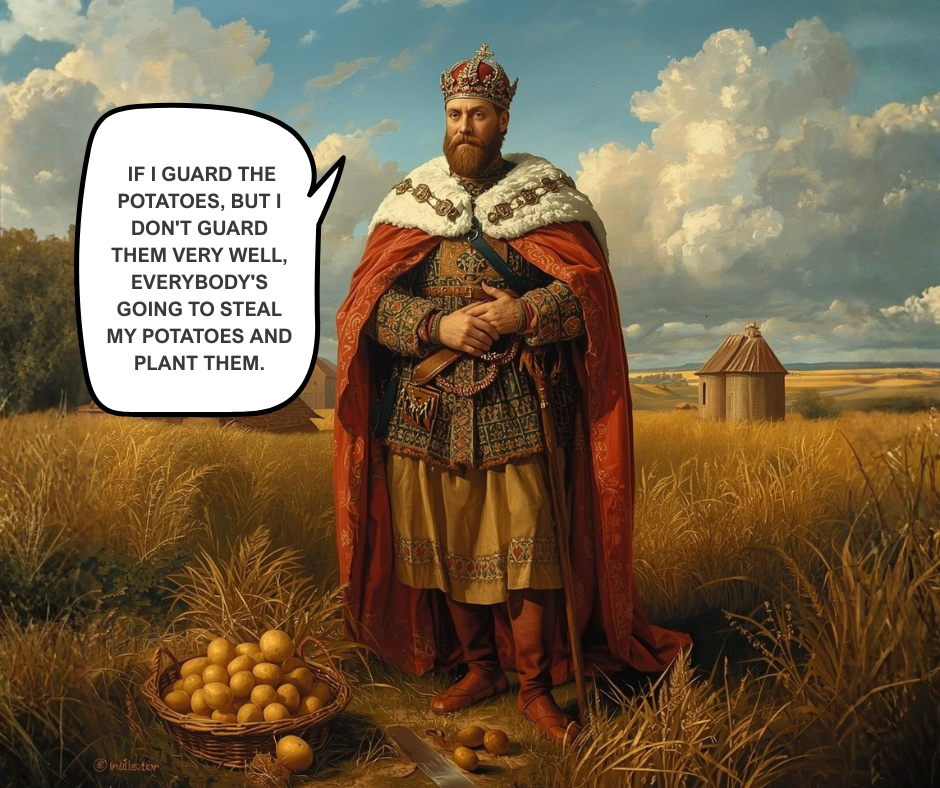
It's like that Polish king who wanted his peasants to eat potatoes. And so he first tried to tell him you should eat potatoes. And then he figured out that if I guard the potatoes, but I don't guard him very well, everybody's going to steal my potatoes and plant them. Google's guarding the potatoes, but not especially well.
Ryan Chute: This is interesting. It may, it reminds me of a movie I saw years and years ago, just trying to see if I could find it on ChatGPT, and it's giving me a few different options. It was about scraping fractions of pennies off of each transaction.
Vi Wickam: Oh, absolutely. That's what all the banks do.
Ryan Chute: This is what all the banks do. And this is exactly what this one person did and made hundreds of millions of dollars.
Vi Wickam: Yeah. Fractions of cents.
Ryan Chute: And this is ultimately what we're talking about here with ad fraud, in one element. One element is that there are bots that are making money off of your ads.
Let's bring this down to real life here. We have a client who's in Southern Texas in a fairly large city, and he's getting tens of thousands, if not hundreds of thousands, more impressions than he is getting total population in the industry. There are way more impressions than there is people. On top of that, those impressions are turning into the potential of how many households might need to have air conditioning repair.
Mick Torbay: So literally every man, woman, and child in that community is clicking on this guy's ads several times.
Ryan Chute: More than once. Or getting that impression, not on the ads, but on the impressions. But then you go through the exercise with him of how many possible people could there possibly be looking for “air conditioning repair near me” today. And the answer is tens of thousands, maybe 18,000, maybe less.
Vi Wickam: I'll accept your supposition.
Ryan Chute: Yes.
Mick Torbay: Certainly not everyone.
Ryan Chute: But based on the certainly not everyone
Vi Wickam: And certainly no more than 5% in a year are looking for that to be replaced.
Ryan Chute: Or a replacement. Or a repair. So if we look at the pure math and the fact that the clicks coming through are 5, 10, 20, 40 times more than the actual demand. You've have to ask yourself, where are these extra leads going to come from? Which ones are real? Which ones are fake for one? What are you paying for? What are you not paying for? You are completely susceptible to not just the ad fraud that's being done externally of Google and other search engines, but you're also getting the ad fraud of Google extorting you for your own name, accepting the fraud that comes that they could catch and they're not catching, and the fact that there's just not that many people possible to capture that. And then of course, they're an auction system that also is the seller of the product, which creates the most significant conflict of interest on the planet.
Vi Wickam: Alright, let's start at the top of this. There's a lot to unpack here. The first thing about impressions and clicks and the population and how many people are in the market. So Google creates in-market audiences. And those in-market audiences could be, like in the market for HVAC service or repair, the way those audiences work is I type in a keyword at some point and for the next six months or 90 days or whatever the length of time for that audience is, I'm in that audience whether I've bought the thing now or not.
So it might be six months' worth of people who mostly have already purchased the service who are still in this audience, because it is people who have typed in one of these keywords that Google has identified as putting you in the market. Now, it could also be that IP address, which is a business that has a thousand people, that all of those people get flagged now as being in the audience, because I did the search from work, and there's a thousand other people that work with me at that same IP address.
Google is trying to make those audiences good, but there are a number of factors that make it hard for those audiences to be good. So I bid on, I want to show to people in this general geographic area who are in this audience. If it's a six-month window, then instead of me looking at the, and the turn of this is really a one-week churn, then I have 25 times more people in that audience than are actually currently in the market. But I don't know how many of those people and which of those people are and aren't actually in the market for that service.
So that's one of the issues with these audiences. And it doesn't mean it's not worthwhile to bid on those audiences. It just means they aren't perfect, and you should know what you're actually buying when you target those audiences.
The next thing is when we're talking impressions, somebody could get 5 or 10 impressions of one of your ads in the same day. So if you're showing ads to people in this demographic area or geographic area, and you're showing a PMax or a Display Network Ad, it's showing as many times as you have budget for clicks to people, all through that area, who fit whatever profile you set up and those profiles aren't perfect and you might be 50-50 at best on them being in your real audience that you're trying to target. So when you get to the end of that, you may have hit some people 20 or 30 times a day, over that 30 days. And some of those people that you wanted to hit, you didn't hit at all because they weren't in the audience, because they didn't search Google for that keyword. So again, not perfect, not actually fraud.
Chris Torbay: But also not what people wanted from their ads.
Vi Wickam: And not really what they were for looking for.
Chris Torbay: And scrolling through a page and then getting served the same ad like 20 times. We have all these sorts of guidelines around frequency, and we know that you need a certain amount of frequency for stuff to really seed in people's minds.
Mick Trobay: But that 20th ad doesn't really do much,
Chris Trobay: But if you're dumping 50 views, 30 views on me, that's not what that client wanted when they said I would like to buy 10,000 views of this ad.
Vi Wickam: No. Now, when you mentioned charging you for your name and letting your competitors bid on your name, that's a whole different class of problematic behavior on the side of the search engines themselves, which is, they won't let you use the name of your competitors in the ad, but they will let you pay to bid on your competitor's name. So not technically fraud, but on the verge of trademark infringement being allowed. But they have lots of lawyers that tell them how far towards that they're allowed to go before it becomes trademark infringement.
Ryan Chute: And it does become those issues of “Best Home Services” and “Quality Home Services.” These are all just generic names. There is no trademark ability of those names. So these are all statements.
Vi Wickam: And even when there is, Google will not stop you from bidding on your competitor's name. So if I bid on my competitor's name, I'm not likely to convert that, but I'm likely to steal that click from them. I'm much less likely to convert when they're not looking for me. They're looking for them. But if I don't pay for my own name, I am potentially giving those clicks to my competitors, which is problematic as well because, from my perspective, Google shouldn't allow that behavior. That is too close to trademark infringement. I would call it trademark infringement to bid on somebody else's name. If I resell a product, then I think that's legitimate. I should be able to bid on that product I sell. But to bid on a competitor's name, I think is problematic.
Mick Torbay: You call it problematic. I call it straight up dodgy. That’s like, if I sell you a gun, and then I say to Chris, Vi's got a gun, and he might shoot you. You should get a gun too to protect yourself from Vi because that guy's packing,
Vi Wickam: And he's got a gun.
Mick Torbay: And I'm selling to both of y'all, and then I go back to you and you're like, he's got a gun. You need a bazooka.
Vi Wickam: Definitely.
Mick Torbay: And the only person who's winning here is me.
Chris Torbay: I think you make a fair point. It's not, you're not going to lose a lot of those things because if somebody is Googling “Vi’s Computer Consultancy” and I buy that click, and so the list comes up, and it says, “Would you like to visit Chris's Computer Consultancy?” It's no, I was deliberately looking for Vi’s.
So then they're going to search again or scroll down to, you'll be at the bottom of the list, whatever. But maybe a couple of them. “Oh, we'll go and say I was looking for Vi, but this guy Chris looks okay. So maybe I'll try him and that for sure.”
Vi Wickam: You won't lose a lot, but you will lose some.
Christina Gressianu: Unless you create a webpage that says “Vi’s Computer Consultancy By Chris,” really small. And so then, when I search for Vi's Computer Consultancy, and I click on this link, and I think it's still Vi's, and I make the phone call, and you're like “Yeah, we've got Vi.”
Chris Torbay: Oh, you mean where you're really devious. It has also happened where it's visconsultancy.org, and it's not his, which is a .com. And so then you go to it, and it's a decoy, but then you're luring me into the thing and very subtly going to switch me over to this Chris guy.
Christina Gressianu: There was a lawsuit. Some lawyers sued some other lawyers. This happened. They won because they won like the deceptive practices. But the lawyers sued the lawyers who were bidding on their keyword. They didn't sue Google.
Mick Torbay: They didn't dare
Christina Gressianu: Rats.
Vi Wickam: No. And that lawyer who was trolling wouldn't outright say that they were them, but they would not say that they weren't. And so they were deceiving the customers as well, and they had ads that used terms that made people think that they were them without using their name, and they still lost millions of dollars for defrauding those customers. So you're right, it's shady. And it's shady on Google's behalf for allowing it to have it.
Chris Torbay: I was going to say the secondary point here is that Google also knows what's goes on, so it's one thing for that person to do something deceptive. But if Google sort of is totally aware that kind of deception is happening, they need to do more.
Ryan Chute: They are conspirators.
Vi Wickam: They're making many millions of dollars, if not billions of dollars off that behavior. And the way that it adds up is if I own the name, and my website is the name, and my content on the website is the name, I get that click for really cheap because I have a very high quality score. If you, Mick, are bidding on my name as a keyword, you are going to pay 10 times more than I would pay for that same click. Google's incentivized for you to get some of those clicks. If I'm paying $5 for that click and you're paying $50, I want you to get some of those clicks.
Mick Torbay: Why do you pay $5, and I pay $50?
Vi Wickam: Because I'm going to have a quality score of 10, which is the best, and you will have a quality score of one, which is the worst. And the quality score is a multiplier that says, I pay one 10th for this keyword.
Mick Torbay: Most of Google's users are not happy with landing on my page.
Vi Wickam: Correct. People are going to be bouncing most of the time, but you're still going to sell a little bit off that. And you're going to, especially if you're tricky about it and you try to deceive people, and when they call you, you don't say, “Oh, we're not Vi’s Computer Service. You clearly have the wrong company service. We're Mick’s Computer Service. We don't wanna deceive you.”
Ryan Chute: There's also an incentive for companies like Google, Amazon is certainly a big culprit of this, where they've coined it broad search, and that's broad search, both in the keywords specifically and in the geography.
And for example, at our home service company in Phoenix, we're consistently seeing companies or clicks coming in, paying for clicks from areas that we're not servicing. And it's just enough outside of the areas that we've already identified equally as much, they take away a certain keyword to say, “Hey, it matched so we're going to show it up.” And then of course, you paid for that. Click congratulations.
Vi Wickam: And Google has systematically made keywords broader in terms of their behavior. In terms of geography, I've gotta side a little with Google on this one, because restricting geography by IP addresses is notoriously hard because you don't know exactly where they are unless they're on a mobile device. If they're on a desktop computer, they are registered to an ISP. The ISP is in a specific town, which may not be the town that computer's located in, and if the ISP doesn't report back where that specific IP address is assigned to, which they generally don't unless they're subpoenaed. Google doesn't actually have a great way to know exactly where you are. They're estimating most of the time.
Mick Torbay: So how tight can they be on mobile devices?
Vi Wickam: It depends on the provider and what data they sell to Google.
Ryan Chute: And if your location is on.
Vi Wickam: Yeah, if you have location tracking turned on, and you have Google Maps installed and active, Google knows exactly where you are. Same thing with Apple and Apple Maps. Apple knows exactly where you are if you're using Apple Maps, or Waze knows exactly where you are, and a lot of those software sell that data to whoever's willing to pay for it. Google's default location is you are in, or frequently in or interested in this area. Now the more restrictive is you are in this area right now, so if you want to have better targeting, you're going to say, I only want to target people who are actually in this area right now, but sometimes it's useful to say I sell tours to Hawaii and I want to target anybody in the US who's interested in Hawaii. I want to target Hawaii and people who are interested in Hawaii, or maybe I want to target anybody who's interested in Hawaii, but not people who are actually in Hawaii.

Ryan Chute: Fascinating subject, and Bob Hoffman's book inside The Black Box, he talks about this being at the levels of organized crime in the multi-hundreds of billions of dollars worth of fraud happening every single year. What are some of the ways that we can advise our clients to protect against it, and the listeners here today, to protect against ad fraud, and maximize some of their ad dollars to go to the best uses? I wouldn't mind picking on you a little bit, Christina, because I know that you have a few ideas on this.
Mick Torbay: And you might not use insider jargon like he does, so that we might actually understand the answer.
Christina Gressianu: Oh, I actually have no idea because I don't do any of this. I would say you have to hire someone who knows how to do the computer shit.
Mick Torbay: That was a great answer.
Ryan Chute: That was actually, that was such a good answer. So you've got to do the computer shit.
Mick Torbay: I picked on Vi a little bit. But the trouble is that you're talking to us like we're smart people, and you need to cut that out.
Ryan Chute: So smart. So I get click bots, like you need to have fraud protection?
Vi Wickam: So step one is don't buy things that are typically fraudy. So don't buy programmatic ad exchanges, which are a thing. That's a thing that a lot of big agencies spend lots of money.
Ryan Chute: Like Tabula and yes.
Vi Wickam: Like Tabula, and there's a bunch of them, but typically those are the most fraud-filled transactions, and I could get into the technicalities of it.
Ryan Chute: Please don't,
Chris Torbay: Just say that's go easy on us.
Vi Wickam: That's mostly fraud traffic. The next, so avoid programmatic. Two, avoid audience expansion anytime you can.
Ryan Chute: So, audience expansion is saying, I want more of the same customers in this area and you're clicking a little button on Facebook, Meta.
Vi Wickam: It's usually on by default, so whether it's Facebook, LinkedIn, TikTok, Instagram, et cetera. Turn it off.
Ryan Chute: So we're turning off that function.
Vi Wickam: Always turn off audience expansion.
Ryan Chute: What else?
Vi Wickam: And don't run display ads. So turn off the display network and the Search Network on Google Ads.
Ryan Chute: Does that include PMax?
Vi Wickam: You gotta be very careful with PMax. PMax can be run at a positive ROI, but you've got to be very careful. PMax is just as fraudy as Display Network if you are not extraordinarily careful because it's running AI expansion, and just like Google added AI expansion for search, and also generates tons of garbage.
I had an HVAC company that we added “HVAC repair” as one of the keywords we were targeting. And it was targeting handyman and lawn service keywords, things that were only tangentially related at best. The expansion of any sort, where you're letting a computer decide who you're going to see, is going to be rife with fraud and garbage.
Ryan Chute: Fascinating.
Mick Torbay: It's terrifying.
Ryan Chute: Absolutely. One of the ways I'm going to throw you another softball here. One of the ways that we can go about getting, avoiding, or reducing the impact of fraud is to have a stronger brand.
Christina Gressianu: So then, when people are searching for your name, that is the hardest to defraud. When people search for Christina Gressianu Shoemaker, that is the hardest brand to defraud because no one can really be Christina Gressianu. So I'm a big fan of all the messaging. Keep your eyes on your own paper and speak your truth in all of your marketing, and don't worry about what's going on out there. And then the right people, whatever that means, will be looking for you specifically.
Ryan Chute: One of the interesting things that I've recently reconciled with is that the right copy finds its way in front of the right people. For example, Ryan Deiss, when we were listening to some of his problem statements, is “Minnesota Moms, True or False? I want an air conditioning company that can come to me in the next hour.” Just as a problem statement. And that copy, just as a simple example. Gets in front of the right person. When I'm tugging the hearts of people who have a heart, a soft spot for veterans, and you leverage a strong, authentic, true veteran message and story, you're going to get in front of the right people who want to be a part of that tribe. And those have the power in bypassing this channel reliance that we have, which is where a lot of people have to overspend in an already expensive space.
Marketing is not cheap, and just because you double your budget doesn't mean you're going to double your leads, and if you doubled your leads, there's a good chance that 25% of them are fake garbage robots. That's right. Robots don't buy air conditioners or hot water tanks or,
Christina Gressianu: I don't know. Robots need a lot of cooling.

Chris Torbay: Yeah, they don't take hot showers.
Vi Wickam: When it really comes down to it, having a strong brand is the cheapest way to avoid fraud because if you're not bidding on general keywords and you're not bidding on broad keywords, and you're only spending money on people who are looking for you by name, which you've got to have a really darn strong brand to only bid on branded keywords.
Chris Torbay: That's what struck me is it sounds like the possibility for fraud expands or grows as you move into these markets where it's open space, people throwing darts at a wall, and you want to be up there with all the other brands that no one has a preference for, right? The more you are in a space where people already know your brand, and they're looking for you specifically, the less there is that ability to have fraudulent clicks, fraudulent displays, fraudulent links and the cost of that connecting to the wrong, paying for a link to somebody you don't want to go to.
Vi Wickam: For sure. I totally agree. The more tightly you are built around your brand, the less opportunities there are for fraud.
Christina Gressianu: I would say that the more generic of a business you have, the more you're right for fraud. If I'm looking for a plumber who likes dogs and cats because I have dogs and cats, then that's a more specific business, more specific person than a plumber.
Ryan Chute: So dialling in a deeper understanding of what our clients are looking for from us helps pull us closer to the people who are looking for that specific service.
Christina Gressianu: I would say so.
Chris Torbay: And the more specifically they're looking, the less rife with fraud, those aspects of the digital space are.
Vi Wickam: For sure. And the better we convey who we are and who the audience can be selected by the messaging, and if the messaging truly reveals who we are as a person or as a business, the better we are going to connect with that audience we're trying to reach.
Christina Gressianu: And the more serious that buyer is, right? If I'm just looking for women's suits, I may or may not be actually ready to buy. But if I'm looking for petite women's suits that are satin and plum, I have a very specific thing. And if you show me that ad, I'm probably going to buy.
Ryan Chute: This is where I think a lot of the click fraud has come up in Amazon, and Amazon is really happy about you clicking on 10 things that are wrong before they click on the one that's right, because they're getting paid all along.
Vi Wickam: Which may be Amazon's undoing in the long run because ultimately, Amazon has been a brand built around customer satisfaction and how much their search function has gone downhill to drive more clicks, which they're getting paid for and is a big part of their revenue, now has undermined customer satisfaction.
Ryan Chute: I think it's a following the money kind of thing, right? It's like I need more money. When we saw Google lose a significant volume of search revenue last year, we saw prices dramatically shoot up. Some of that was announced, a whole bunch of it was not announced, meaning you're just surprised. Get to pay more now. Tough luck.
Vi Wickam: Not actually an auction.
Ryan Chute: Not actually an auction, right? It's actually a complete scam of an auction because you can't be the auctioneer and the person selling the product to make it an auction.
Vi Wickam: And Google came on under scrutiny not very long ago when internal documents were leaked that showed that internal people to Google had increased prices just because they were trying to meet revenue.
Ryan Chute: There are pressures. That's right. So, how does this shift as we finish off this conversation? How does this shift with AI search? And with voice search making a significant leap forward?
Vi Wickam: So Google just announced that AI mode is a thing. And so we've gone from search results that were just “search,” right? We just had organic search, and then we added a sidebar of ads. Then we added the three ads at the top, and so what Google really wants is people to do things that make Google money. So ultimately, they don't want you clicking on organic search results. Those are just there because that's the value to the customer.
Mick Torbay: Which is strange because that's actually the thing that we all thought we were going to get.
Vi Wickam: That's what we all wanted.
Mick Torbay: That's what search was going to do today. We wanted an honest search.
Vi Wickam: So then we started adding structured snippets, which were attempts to answer the question without you ever leaving Google. So undermining the organic search results by answering the question first in a structured way. The next level was we added AI search summaries, and that is causing huge drops in search traffic for people across the board. I read recently that many sites have seen 50% or more drops in traffic without drops in impressions. So the same number of people are searching for you. You're showing up in the same place, but you've just lost half the traffic because the answer is being given in an AI summary and people are staying on Google. Google wants people to stay on Google unless they're clicking on an ad,
Ryan Chute: Deeply incentivized to stay on Google.
Vi Wickam: Unless they're clicking on an ad. Google doesn't want them clicking anywhere.
Mick Torbay: And now to look at it at a true like legitimate search, you actually have to go to the second page.
Vi Wickam: Absolutely. Nothing above the fold is leaving Google without Google getting paid.
Ryan Chute: And who wants to keep going? At the end of the day, if it's answered your question, they're clicking the phone, they're clicking the chat, they're clicking the “Schedule Now” button. They're clicking the “Reserve Now” button, and Google's getting paid.
Vi Wickam: So, AI mode now is only going to give them one answer. You don't get the results, may or may not get any citations, you're going to get one result, which is in the direction of what we talked about at the partner meeting after my presentation, which was what Google and Alexa and Siri and Cortana are all going to do before long is I'm going to call or I'm going to say, “Hey, Google, my air conditioner's broken.” And it might go even further, where my air conditioner contacts Google and says, “Alert, alert, signal.”
Christina Gressianu: “Help me. Help me.”
Vi Wickam: Preemptively, because it's monitoring it. And Google will automatically dispatch whomever they decide.
Mick Torbay: And that will be whoever pays Google the most amount of money.
Vi Wickam: Correct. It will be whoever is paying the most for that booking because software like ServiceTitan already has booking integrations with Google. If you don't have those set up, and you don't have a strong brand, and you don't own the relationship with your customers. You're not in that game, you will soon be out on your teeth.
Ryan Chute: If that's the case, and if you're not a company that's big enough to have ServiceTitan or chooses not to use ServiceTitan for their own good reasons, brand still seems to be pulling forward to help equalize this over the three layers of marketing that we can do.
Vi Wickam: Brand is the only way to hijack this system. You can manage the system if you're a strong enough company, and you target tight enough. You don't tie, you don't target broadly. You don't target geographically, broad or keyword broad or any of those kinds of things. You target as tightly as you reasonably can. You build a brand, you have to build a brand. That is the only way to hijack a system where the AI results get booked automatically.
Ryan Chute: So to be clear, we're not talking about brand or lead gen. We're not talking about one or the other. These aren't mutually exclusive things. Marketing is never going to be successful that way. Marketing is going to be successful based on the astounding amounts of research that already exist out there with brand awareness, sales activation, and lead capture, working hand in hand, not independently in silos.
This is what I call holistic brand forward marketing strategy, and it's built and designed to think about where you're going to both spend your money and deliver your message, and how you're going to deliver your message in a way that isn't just going to be seen at the moment of need, but before that and after that, so that you can build a base that doesn't have such dependence on the channels.
This has been a really fascinating conversation. I appreciate everyone here today with the contributions and input, and insights, and I look forward to seeing you. We all look forward to seeing you on the next episode of Advertising in America. Until next time.
Thank you for joining us on Advertising in America. We hope you enjoyed the show and captured a nugget of marketing magic. Wanna hear more? Subscribe, leave a review and share this podcast with your friends. Do you have questions or topics you want us to cover?
Join us on our socials @advertisinginamerica. Want to spend your marketing budget better? Visit us at wizardofads.services to book your free strategy session with Wizard Ryan Chute today. Until next time, keep your ads enchanting and your audience captivated.








.webp)


.webp)

.webp)
.webp)

%20(1).webp)
.webp)
.webp)


.webp)


.webp)


.webp)


.webp)
.webp)


.webp)
.webp)


